Cleveland Cavaliers vs OKC Thunder Match Player Stats: 121–113 Victory Breakdown

Game Introduction: High Stakes Night in Oklahoma City
The latest Cleveland Cavaliers vs OKC Thunder Match Player Stats tell the full story of a fast-paced, high-efficiency battle at Paycom Center. On Sunday, February 22, 2026, the crowd of 18,203 fans in Oklahoma City watched a sharp and confident performance from the home side.
This matchup featured elite talent from both the Cleveland Cavaliers and the Oklahoma City Thunder. From perimeter shooting to interior dominance, the numbers reveal how the Thunder controlled key stretches and closed strong in front of their home fans.
Match Overview: Thunder Secure a 121–113 Victory
The Oklahoma City Thunder defeated the Cleveland Cavaliers 121–113 at Paycom Center. OKC shot 48.8% from the field and a blazing 51.2% from three-point range (21 made threes), while also distributing 32 assists. Cleveland matched them in total rebounds (44 each) but committed 17 turnovers and struggled to contain Oklahoma City’s perimeter efficiency.
This was a balanced team win for the Thunder. Five players scored in double figures, and their ball movement kept Cleveland’s defense rotating all night. The Cleveland had strong scoring from multiple guards, but defensive lapses and OKC’s three-point accuracy proved decisive.
Quick Look Back: Previous Meeting Between These Teams
Before this February clash, these teams met on Monday, January 19, 2026, at Rocket Arena in Cleveland. In that game, Oklahoma City dominated with a 136–104 victory over the Cavaliers.
The Thunder’s offensive explosion in that earlier matchup showed similar trends—strong shooting, fast pace, and aggressive scoring runs. That result already hinted at OKC’s matchup advantage entering this rematch.
Team Performance Snapshot
Cleveland Cavaliers: Balanced Scoring but Defensive Gaps
Cleveland finished with 113 points on 43-of-89 shooting (48.3%). They made 13 threes and recorded 28 assists, showing solid offensive flow. However, their 33.3% three-point shooting and 17 turnovers limited their momentum.
Despite matching OKC with 44 total rebounds, Cleveland’s -8 overall plus/minus reflected defensive struggles during crucial stretches. Their interior presence was solid, but perimeter coverage allowed too many clean looks.
Oklahoma City Thunder: Elite Shooting and Ball Movement
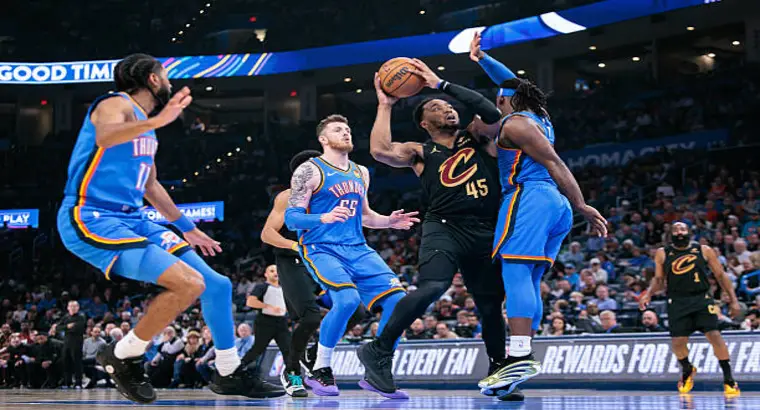
Oklahoma City scored 121 points on 42-of-86 shooting (48.8%). The biggest difference came from beyond the arc—21 made three-pointers at 51.2%. That efficiency stretched Cleveland’s defense and created driving lanes.
The Thunder also registered 32 assists and 12 steals. Their defensive pressure forced timely mistakes, while their +8 team plus/minus shows how effectively they controlled the tempo. For more detailed breakdowns like this, explore our complete match player analytics hub.
Cleveland Cavaliers Top Players Stats
1. Donovan Mitchell
Stats Overview:
- Points: 20
- Rebounds: 7
- Assists: 5
- Steals: 2
- Blocks: 0
- Turnovers: 3
- Plus/Minus: -1
Performance Insights:
Mitchell attacked the rim early and kept Cleveland within reach during second-half stretches. His shot selection was controlled, and his two steals showed defensive activity despite the team’s overall struggles.
2. James Harden
Stats Overview:
- Points: 20
- Rebounds: 5
- Assists: 9
- Steals: 1
- Blocks: 1
- Turnovers: 5
- Plus/Minus: -13
Performance Insights:
Harden orchestrated the offense and nearly recorded a double-double. His nine assists fueled Cleveland’s ball movement, but five turnovers and a -13 plus/minus reflected the defensive swings when he was on the floor.
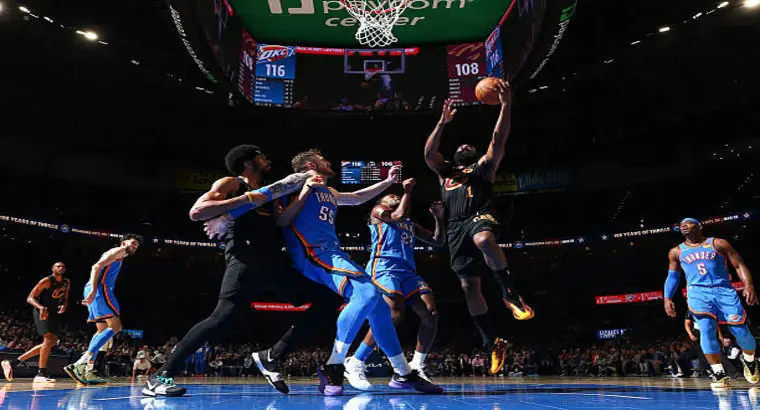
3. Sam Merrill
Stats Overview:
- Points: 20
- Rebounds: 3
- Assists: 0
- Steals: 0
- Blocks: 0
- Turnovers: 0
- Plus/Minus: +6
Performance Insights:
Merrill was lethal from deep, hitting six of ten three-pointers (60%). His spacing gave Cleveland life during momentum shifts, and his +6 rating was the best among high-minute Cavaliers.
4. Evan Mobley
Stats Overview:
- Points: 15
- Rebounds: 2
- Assists: 1
- Steals: 1
- Blocks: 0
- Turnovers: 1
- Plus/Minus: -3
Performance Insights:
Mobley provided efficient scoring at 54.5% shooting. While his rebounding numbers were modest, he showed composure inside and converted key mid-range opportunities.
5. Jarrett Allen
Stats Overview:
- Points: 11
- Rebounds: 13
- Assists: 2
- Steals: 1
- Blocks: 0
- Turnovers: 3
- Plus/Minus: -15
Performance Insights:
Allen dominated the glass with 13 rebounds, including six offensive boards. However, the -15 plus/minus suggests Cleveland struggled defensively during his minutes despite strong interior work.
Cavaliers Key Reserve Contributions
Dennis Schröder added 11 points and 7 assists off the bench, stabilizing ball control in key stretches. Keon Ellis contributed 9 points and 2 steals, while Jaylon Tyson chipped in 7 points. Cleveland’s depth showed flashes, but defensive consistency remained an issue.
Oklahoma City Thunder Top Performers – Match Player Stats
The Cleveland Cavaliers vs OKC Thunder Match Player Stats clearly show how Oklahoma City’s balanced attack powered the 121–113 win. Five Thunder players scored in double figures, and their shooting efficiency created separation at key moments.
1. Isaiah Joe
Stats Overview:
- Points: 22
- Rebounds: 2
- Assists: 3
- Steals: 5
- Blocks: 0
- Turnovers: 3
- Plus/Minus: +14
Performance Insights:
Isaiah Joe changed the rhythm of the game with six made three-pointers (6-of-11). His five steals fueled transition chances, and his +14 rating reflected his two-way impact during Oklahoma City’s most dominant stretches.
2. Cason Wallace
Stats Overview:
- Points: 20
- Rebounds: 4
- Assists: 10
- Steals: 3
- Blocks: 0
- Turnovers: 1
- Plus/Minus: +13
Performance Insights:
Wallace controlled the tempo with 10 assists and just one turnover. He hit four threes and defended aggressively, helping OKC win the playmaking battle. His decision-making under pressure stood out late in the fourth quarter.
3. Chet Holmgren
Stats Overview:
- Points: 17
- Rebounds: 15
- Assists: 4
- Steals: 1
- Blocks: 3
- Turnovers: 2
- Plus/Minus: +17
Performance Insights:
Holmgren anchored the paint with 15 rebounds and three blocks. He altered multiple shots inside and stretched the floor offensively. His +17 plus/minus was one of the best marks in the game.
4. Isaiah Hartenstein
Stats Overview:
- Points: 13
- Rebounds: 7
- Assists: 4
- Steals: 0
- Blocks: 0
- Turnovers: 1
- Plus/Minus: +23
Performance Insights:
Hartenstein delivered a highly efficient night, shooting 6-of-6 from the field. His +23 was the highest in the game, showing how dominant Oklahoma City was when he was on the court.
5. Luguentz Dort
Stats Overview:
- Points: 12
- Rebounds: 3
- Assists: 2
- Steals: 2
- Blocks: 0
- Turnovers: 2
- Plus/Minus: +1
Performance Insights:
Dort contributed steady perimeter defense and timely scoring. His two steals disrupted Cleveland’s guards, and his physical presence added defensive balance throughout the matchup.
Thunder Key Reserve Contributions
Jared McCain and Jaylin Williams each added 10 points, with Williams knocking down three triples. Aaron Wiggins provided 7 points and 4 assists, while Kenrich Williams added 8 points on perfect shooting. The Thunder bench maintained scoring pace and preserved the lead during rotations.
People Also Read: LA Clippers vs 76ers Match Player Stats
Stats Comparison – Thunder vs Cavaliers
| Category | Cleveland Cavaliers | Oklahoma City Thunder |
|---|---|---|
| Field Goals | 43/89 (48.3%) | 42/86 (48.8%) |
| Three-Pointers | 13/39 (33.3%) | 21/41 (51.2%) |
| Free Throws | 14/19 (73.7%) | 16/25 (64.0%) |
| Total Rebounds | 44 | 44 |
| Offensive Rebounds | 12 | 13 |
| Assists | 28 | 32 |
| Steals | 9 | 12 |
| Blocks | 3 | 4 |
| Turnovers | 17 | 16 |
| Personal Fouls | 22 | 19 |
| Total Points | 113 | 121 |
Oklahoma City’s edge from beyond the arc defined this matchup. While rebounds were equal at 44 each, the Thunder’s 21 made threes created the scoring gap. Their assist total (32) also highlights stronger ball movement in this edition of Cleveland Cavaliers and OKC Thunder Match.
Momentum & Turning Points – Quarter by Quarter
The Cleveland Cavaliers vs OKC Thunder Match Player Stats clearly reflect how momentum shifted across all four quarters. Each period had its own story, but Oklahoma City’s efficiency proved stronger over time.
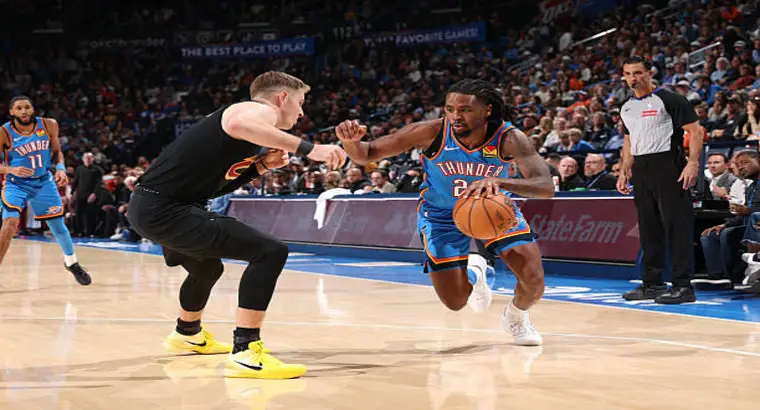
First Quarter – Fast Start from Deep
Oklahoma City opened the game with confident perimeter shooting. Isaiah Joe and Cason Wallace knocked down early threes, forcing Cleveland to adjust defensively. The Thunder’s spacing and quick ball movement gave them an early rhythm advantage.
Second Quarter – Cavaliers Push Back
Cleveland responded with energy off the bench. Sam Merrill stretched the floor, while Dennis Schröder controlled the pace and created scoring chances. Jarrett Allen added strength on the boards, keeping the Cavaliers within striking distance.
Third Quarter – Shooting Gap Widens
This quarter shifted control firmly toward OKC. The Thunder’s three-point accuracy surged, contributing to their 51.2% finish from beyond the arc. Defensive pressure also forced key turnovers, leading to extra scoring opportunities.
Fourth Quarter – Composed Closing Stretch
Cason Wallace managed the final minutes with poise, finishing with 10 assists and just one turnover. Oklahoma City protected the ball and chose high-quality shots. Cleveland competed until the end, but OKC’s control secured the 121–113 victory.
Core Insights from the Thunder Victory
The biggest difference in the Cleveland Cavaliers vs OKC Thunder Match Player Stats was three-point production. Oklahoma City made 21 threes compared to Cleveland’s 13. That eight-shot gap from deep created the margin of victory.
Both teams grabbed 44 rebounds, proving this was not decided inside. Instead, ball movement (32 assists by OKC) and defensive disruption (12 steals) tilted the balance. When evaluating advanced NBA teams efficiency trends, this game stands as a textbook example of spacing and perimeter execution winning over rebounding parity.
Frequently Asked Questions
Who was the top scorer in the game?
Isaiah Joe led all scorers with 22 points, shooting 6-of-11 from three-point range and adding five steals.
How did the Cavaliers perform offensively?
Cleveland shot 48.3% from the field and recorded 28 assists. However, they made only 13 three-pointers and committed 17 turnovers.
Which player had the best plus/minus rating?
Isaiah Hartenstein posted the highest plus/minus in the game at +23, reflecting Oklahoma City’s dominance during his minutes.
Did both teams rebound equally?
Yes, both teams finished with 44 total rebounds. Rebounding was not the deciding factor in this matchup.
How many three-pointers did OKC make?
The Thunder made 21 three-pointers on 41 attempts, shooting an impressive 51.2% from beyond the arc.
How did Donovan Mitchell perform?
Mitchell scored 20 points with 7 rebounds and 5 assists, but Cleveland struggled defensively during key stretches.
What was the attendance for the game?
The official attendance at Paycom Center was 18,203 fans.
1. Who won the thunder and Cavaliers matchup?
The Oklahoma City Thunder defeated the Cleveland Cavaliers 121–113 at Paycom Center.
Final Thoughts
The Cleveland Cavaliers and OKC Thunder Match show a modern NBA blueprint in action. Oklahoma City relied on spacing, ball movement, and perimeter accuracy to secure the win. Cleveland displayed balanced scoring and rebounding strength, but OKC’s efficiency from deep proved decisive.