Miami Heat vs Cleveland Cavaliers Match Player Stats: Complete Box Score & Key Insights

Match Recap in Brief
The Miami Heat vs Cleveland Cavaliers Match Player Stats from November 12, 2025 show a dominant Cleveland win, 130–116. Jarrett Allen led with 30 points and 10 rebounds, while Norman Powell scored 27 for Miami. Cleveland’s 32 assists and +14 team differential defined the game.
Miami Heat vs Cleveland Cavaliers Match – Game Context & What We Cover
The November 12, 2025 clash at the Kaseya Center saw the Cleveland Cavaliers overpower the Miami Heat with a 130–116 victory. Cleveland controlled tempo, shot efficiently inside, and moved the ball at an elite level.
In this detailed breakdown, we analyze verified box score data, key players, team efficiency metrics, and strategic shifts. We’ll also briefly touch on how this result shapes their March 25, 2026 rematch — insights built for readers of NBA Stats Time.
Match Overview – Who Won and Why It Happened
Cleveland defeated Miami 130–116 in a high-possession game. The Cavaliers shot 43.3% from the field, generated 32 assists, grabbed 49 rebounds, and finished with a +14 differential. Miami shot 47.9% but committed 21 turnovers — the key swing factor.
This game turned on ball movement and interior dominance. Cleveland Cavaliers attacked the paint through Jarrett Allen and created perimeter looks via Craig Porter Jr.’s playmaking. Miami had scoring bursts but never fully controlled the rhythm.
Team Performance Analysis
Cleveland Cavaliers – Balanced, Physical, Efficient
Cleveland’s offensive structure was sharp. They recorded 45 made field goals on 104 attempts and dominated the glass with 49 total rebounds. Their 32 assists show constant off-ball movement and trust in the system.
Defensively, 13 steals and 10 blocks disrupted Miami’s half-court sets. The Cleveland Cavaliers forced 21 Heat turnovers and converted those mistakes into transition points.
Miami Heat – Scoring Runs but Costly Mistakes
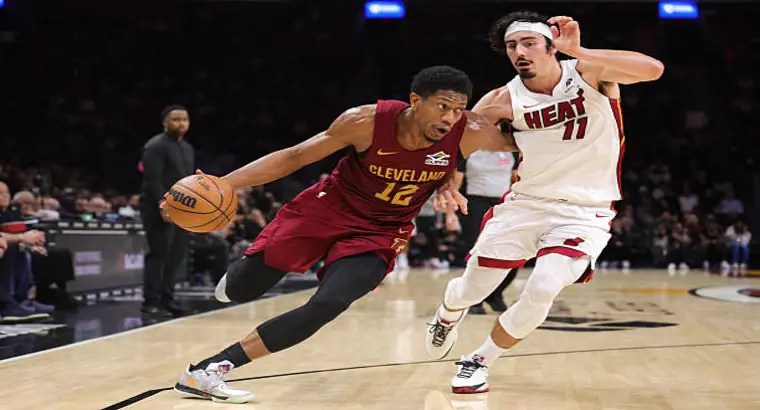
Miami’s shot efficiency (47.9%) was actually higher than Cleveland’s, but the turnover gap hurt them badly. The Heat finished with 21 turnovers compared to Cleveland’s 12.
Rebounding was competitive (44 total), but second-chance control favored Cleveland. Miami showed perimeter scoring strength yet struggled to sustain defensive stops when momentum shifted.
Cleveland Cavaliers Key Players Stats
1. Jarrett Allen
Stats
- Points: 30
- Rebounds: 10
- Assists: 2
- Steals: 0
- Blocks: 0
- Turnovers: 1
- Plus/Minus: +2
Performance Insights:
Allen dominated inside with efficient finishing (12/20 FG). He controlled paint spacing, punished mismatches, and anchored Cleveland’s interior presence throughout key stretches.
2. De’Andre Hunter
Stats
- Points: 21
- Rebounds: 6
- Assists: 2
- Steals: 2
- Blocks: 0
- Turnovers: 3
- Plus/Minus: +4
Performance Insights:
Hunter provided two-way stability. His 61.5% shooting kept Miami’s defense stretched while his perimeter activity added defensive balance.
3. Craig Porter Jr.
Stats
- Points: 19
- Rebounds: 4
- Assists: 9
- Steals: 3
- Blocks: 4
- Turnovers: 2
- Plus/Minus: +21
Performance Insights:
Porter Jr. was the hidden engine. His +21 differential and 9 assists show he controlled the pace. He influenced both ends with playmaking and rim protection.
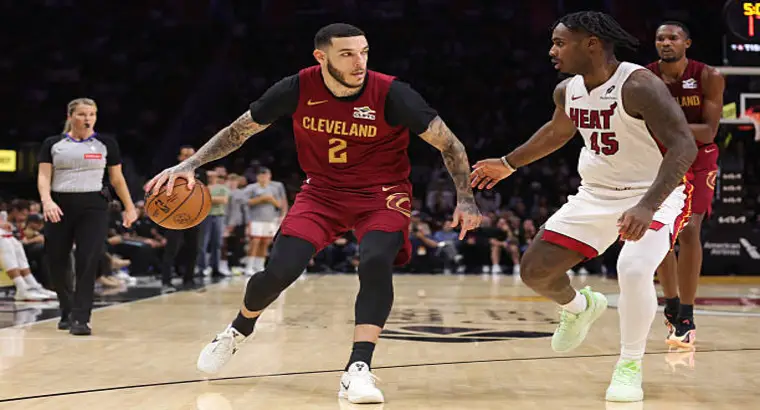
4. Lonzo Ball
Stats
- Points: 15
- Rebounds: 2
- Assists: 8
- Steals: 1
- Blocks: 1
- Turnovers: 3
- Plus/Minus: -9
Performance Insights:
Ball stretched the floor with 4 three-pointers and facilitated transition flow. Though minus in differential, his offensive spacing mattered.
5. Tyrese Proctor
Stats
- Points: 12
- Rebounds: 2
- Assists: 2
- Steals: 0
- Blocks: 0
- Turnovers: 0
- Plus/Minus: +19
Performance Insights:
Proctor’s efficiency fluctuated, but his +19 impact shows lineup synergy. He contributed timely scoring during rotation minutes.
Cleveland Bench Impact
Larry Nance Jr., Luke Travers, Thomas Bryant, and Nae’Qwan Tomlin added physical depth. Tomlin’s +20 plus/minus and Bryant’s interior rebounds stabilized second-unit stretches. Cleveland’s bench energy shifted momentum in the second half.
Miami Heat Leading Players Stats
1. Norman Powell
Stats
- Points: 27
- Rebounds: 2
- Assists: 5
- Steals: 0
- Blocks: 0
- Turnovers: 3
- Plus/Minus: -3
Performance Insights:
Powell carried Miami’s scoring load with 10-of-18 shooting and five made threes. He sparked second-quarter runs and attacked gaps in transition, but Cleveland’s defensive rotations limited his late-game rhythm.
2. Andrew Wiggins
Stats
- Points: 17
- Rebounds: 9
- Assists: 6
- Steals: 0
- Blocks: 2
- Turnovers: 5
- Plus/Minus: -9
Performance Insights:
Wiggins filled the stat sheet across categories. His rebounding and secondary playmaking kept Miami competitive, though five turnovers slowed offensive flow at critical moments.
3. Davion Mitchell
Stats
- Points: 16
- Rebounds: 3
- Assists: 4
- Steals: 1
- Blocks: 0
- Turnovers: 1
- Plus/Minus: -10
Performance Insights:
Mitchell played with control and efficiency, shooting 7-of-13 from the field. His perimeter defense created brief energy swings, but Cleveland’s ball movement minimized extended stops.
4. Kel’el Ware
Stats
- Points: 15
- Rebounds: 13
- Assists: 1
- Steals: 1
- Blocks: 1
- Turnovers: 1
- Plus/Minus: -2
Performance Insights:
Ware delivered an elite inside presence with 85.7% shooting and 13 rebounds. He battled physically against Jarrett Allen and provided Miami’s strongest interior resistance.
5. Simone Fontecchio
Stats
- Points: 13
- Rebounds: 4
- Assists: 0
- Steals: 1
- Blocks: 0
- Turnovers: 2
- Plus/Minus: -13
Performance Insights:
Fontecchio added efficient perimeter scoring off the bench. His three-point accuracy helped narrow gaps, though defensive mismatches hurt Miami’s second-unit stability.
Miami Bench Impact – Rotation Influence
Jaime Jaquez Jr. (11 points), Dru Smith (6 points), and Nikola Jović (2 points) provided depth minutes. However, Miami’s bench struggled with efficiency and ball security, combining for multiple turnovers that Cleveland converted into fast-break opportunities.
For deeper rotational comparisons, check our evolving NBA team stats breakdowns to see how bench production influences outcomes across the league.
Cleveland vs Miami Match Stats Comparison
| Category | Cleveland Cavaliers | Miami Heat |
|---|---|---|
| Points | 130 | 116 |
| Field Goal % | 43.3% | 47.9% |
| 3-Point % | 29.8% | 40.5% |
| Free Throw % | 83.9% | 84.6% |
| Total Rebounds | 49 | 44 |
| Assists | 32 | 29 |
| Turnovers | 12 | 21 |
| Steals | 13 | 6 |
| Blocks | 10 | 6 |
Statistical Takeaway:
Despite Miami shooting better from the field and beyond the arc, Cleveland’s turnover control and defensive activity (13 steals, 10 blocks) created separation. The +9 rebound margin and +9 turnover differential were decisive.
If you compare this with Cleveland’s earlier performance, including their previous high-scoring outing, you’ll see a similar pattern of assist-heavy offense and paint control.
Tempo & Strategic Shifts
First Quarter – Establishing Physical Tone
Cleveland attacked the paint early through Allen. Miami relied on perimeter spacing, but second-chance rebounds gave the Cavaliers an early edge in possessions.
Second Quarter – Miami’s Scoring Burst
Powell’s shot-making fueled a Heat run. Wiggins added transition baskets, trimming the gap. However, Cleveland’s bench maintained composure and limited the swing.
Third Quarter – Defensive Separation
Craig Porter Jr.’s playmaking and steals shifted control. Cleveland forced turnovers and pushed tempo, stretching the lead into double digits.
Fourth Quarter – Closing with Control
Miami attempted late perimeter rallies, but Cleveland slowed pace and executed in half-court sets. Smart ball movement and interior finishes sealed the 130–116 win.
Miami Heat vs Cleveland Cavaliers – Previous Match Snapshot (Nov 10, 2025)
Before this 130–116 result, these teams met on November 10, 2025 at the Kaseya Center. That contest was a thriller, with the Miami Heat edging the Cleveland Cavaliers 140–138.
That two-point battle showcased elite offensive efficiency from both sides. The November 12 matchup, however, flipped the script completely — Cleveland adjusted defensively and controlled possessions far better.
How This Game Sets the Stage for March 25, 2026 Rematch
This November 12 result shifts psychological momentum toward Cleveland heading into the March 25, 2026 meeting. The Cavaliers proved they can neutralize Miami’s perimeter scoring by forcing turnovers and dominating interior rebounds.
For Miami, the lesson is clear: ball security and defensive rotations must improve. If they limit turnovers and maintain rebounding balance, the next matchup could look very different. This game laid the tactical foundation for that adjustment.
FAQs
1. Who won the November 12, 2025 game between Miami Heat and Cleveland Cavaliers?
The Cleveland Cavaliers won 130–116. They controlled rebounds, forced 21 Miami turnovers, and recorded 32 assists, which defined the outcome.
2. Who scored the most points in the game?
Jarrett Allen led all scorers with 30 points. For Miami, Norman Powell paced the team with 27 points.
3. Why did Cleveland win despite lower shooting percentage?
Cleveland committed only 12 turnovers compared to Miami’s 21. They also grabbed 49 rebounds and generated 13 steals, creating more scoring opportunities.
4. How did Kel’el Ware perform in the matchup?
Kel’el Ware scored 15 points on 6-of-7 shooting and collected 13 rebounds. He provided Miami’s strongest interior presence.
5. Which player had the highest plus/minus impact?
Craig Porter Jr. posted a +21 plus/minus. His 9 assists and defensive activity strongly influenced momentum.
6. How important were turnovers in this game?
Turnovers were decisive. Miami’s 21 turnovers led to transition scoring for Cleveland and prevented sustained comeback runs.
7. Where can I find more detailed NBA match breakdowns?
You can explore deeper verified box score insights and analytics on NBA Stats Time and our dedicated match player performance analysis section.
Final Thoughts
The Miami Heat vs Cleveland Cavaliers Match Player Stats reveal more than a final score. Cleveland’s discipline, rebounding control, and defensive pressure shaped the game. Miami showed scoring strength but lacked possession stability.
As the season progresses, this matchup stands as a tactical blueprint. If both teams adjust correctly, the March rematch could become one of the season’s most strategic battles in the NBA.