Miami Heat vs Brooklyn Nets Match Player Stats (Latest Game March 5, 2026)

Game Breakdown: Miami vs Brooklyn
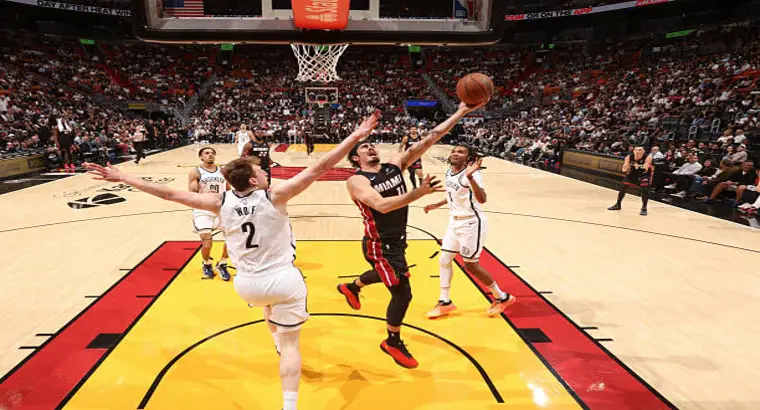
The Miami Heat vs Brooklyn Nets match player stats tell the story of a fast-paced contest where Miami’s efficient shooting and strong interior defense helped them secure a convincing win. Playing at the Kaseya Center, the Miami Heat controlled key stretches of the game and finished with a 126-110 victory over Brooklyn.
Miami looked sharp offensively from the opening quarter. Tyler Herro led the scoring effort while Bam Adebayo and Kel’el Ware dominated inside. Brooklyn had solid scoring from Michael Porter Jr., but Miami’s balanced attack and defensive pressure proved too much to overcome.
Game Details
| Detail | Information |
|---|---|
| Match | Miami Heat vs Brooklyn Nets |
| Date | Thursday, March 5, 2026 |
| Time | 5:30 AM |
| Venue | Kaseya Center, Miami, FL |
| Attendance | 19,700 |
| Officials | John Goble, John Conley, Ashley Moyer-Gleich |
| Final Score | Miami Heat 126 – Brooklyn Nets 110 |

Key Team Performances
Miami Heat Performance
Miami delivered one of their most balanced offensive games of the season. The team shot 52.7% from the field, moved the ball effectively with 29 assists, and controlled the paint through Bam Adebayo and Kel’el Ware.
Tyler Herro’s scoring burst kept the offense flowing, while Jaime Jaquez Jr. contributed across multiple categories with scoring, rebounds, and playmaking. Miami’s defensive activity also stood out with 13 steals and 8 blocks, showing the aggressive style that often defines NBA match player stats games like this.
A similar aggressive offensive rhythm & shot efficiency was visible in this season when Miami Heat faced Cleveland Cavaliers, but unfortunately they lost match due to turnover gap.
Brooklyn Nets Performance
Brooklyn had several positive individual performances but struggled to match Miami’s efficiency. Michael Porter Jr. carried the scoring load with 27 points and strong rebounding, while Noah Clowney added valuable perimeter shooting.
The Nets actually moved the ball well with 30 assists, but turnovers and defensive lapses allowed Miami to stretch the lead. Despite strong rebounding numbers, Brooklyn could not slow down Miami’s interior scoring during the second half.
Quarter-by-Quarter Score Breakdown
| Team | Q1 | Q2 | Q3 | Q4 | Final |
|---|---|---|---|---|---|
| Brooklyn Nets | 26 | 30 | 27 | 27 | 110 |
| Miami Heat | 31 | 29 | 35 | 31 | 126 |
Miami gained early momentum with a strong first quarter and never truly lost control. Brooklyn briefly closed the gap in the second period, but the Heat responded with a 35-point third quarter that created the decisive separation.
Individual Player Statistics Overview
The Miami Heat vs Brooklyn Nets match player stats reveal a game driven by offensive balance and strong contributions from multiple players. Miami had several players in double figures, while Brooklyn leaned heavily on a few key scorers.
Below is a detailed look at individual performances from both teams based on the official NBA box score data.
Miami Heat Player Statistics
| Player | POS | PTS | MIN | FGM | FGA | FG% | 3PM | 3PA | 3P% | FTM | FTA | FT% | OREB | DREB | REB | AST | STL | BLK | TO | PF | +/- |
|---|---|---|---|---|---|---|---|---|---|---|---|---|---|---|---|---|---|---|---|---|---|
| Tyler Herro | G | 25 | 31:05 | 9 | 16 | 56.3 | 2 | 7 | 28.6 | 5 | 5 | 100 | 0 | 4 | 4 | 5 | 0 | 0 | 3 | 1 | 6 |
| Bam Adebayo | C | 21 | 24:57 | 7 | 15 | 46.7 | 0 | 4 | 0.0 | 7 | 8 | 87.5 | 3 | 4 | 7 | 2 | 1 | 1 | 1 | 5 | 10 |
| Jaime Jaquez Jr. | F | 18 | 32:38 | 6 | 9 | 66.7 | 0 | 0 | 0.0 | 6 | 6 | 100 | 0 | 7 | 7 | 7 | 0 | 0 | 2 | 1 | 11 |
| Pelle Larsson | F | 16 | 30:29 | 6 | 13 | 46.2 | 2 | 2 | 100 | 2 | 2 | 100 | 0 | 1 | 1 | 4 | 0 | 0 | 1 | 4 | 14 |
| Kel’el Ware | C | 16 | 31:44 | 7 | 9 | 77.8 | 1 | 2 | 50.0 | 1 | 2 | 50.0 | 4 | 7 | 11 | 1 | 5 | 7 | 1 | 2 | 18 |
| Kasparas Jakučionis | G | 11 | 20:49 | 4 | 9 | 44.4 | 3 | 7 | 42.9 | 0 | 0 | 0.0 | 1 | 5 | 6 | 3 | 2 | 0 | 4 | 2 | 20 |
| Dru Smith | G | 9 | 21:12 | 4 | 6 | 66.7 | 1 | 1 | 100 | 0 | 1 | 0.0 | 2 | 0 | 2 | 2 | 1 | 0 | 0 | 2 | 11 |
| Andrew Wiggins | F | 8 | 22:54 | 4 | 10 | 40.0 | 0 | 3 | 0.0 | 0 | 0 | 0.0 | 1 | 3 | 4 | 1 | 2 | 0 | 0 | 0 | -5 |
| Davion Mitchell | G | 2 | 22:54 | 1 | 4 | 25.0 | 0 | 1 | 0.0 | 0 | 0 | 0.0 | 1 | 1 | 2 | 4 | 2 | 0 | 0 | 3 | -5 |
| Myron Gardner | F | 0 | 0:26 | 0 | 0 | 0.0 | 0 | 0 | 0.0 | 0 | 0 | 0.0 | 0 | 1 | 1 | 0 | 0 | 0 | 0 | 0 | 0 |
| Jahmir Young | G | 0 | 0:26 | 0 | 0 | 0.0 | 0 | 0 | 0.0 | 0 | 0 | 0.0 | 0 | 0 | 0 | 0 | 0 | 0 | 0 | 0 | 0 |
| Trevor Keels | G | 0 | 0:26 | 0 | 0 | 0.0 | 0 | 0 | 0.0 | 0 | 0 | 0.0 | 0 | 0 | 0 | 0 | 0 | 0 | 0 | 0 | 0 |
Impact of Miami’s Bench Unit
Miami’s bench depth played a major role in the victory. Kel’el Ware, Kasparas Jakučionis, and Dru Smith delivered strong minutes off the bench, combining scoring with defensive activity. Their energy helped Miami maintain momentum whenever the starters rotated out.
Bench production has been a consistent factor in many recent NBA match player stats games this season, especially for teams pushing for playoff positioning in the Eastern Conference.
Brooklyn Nets Player Stats
| Player | POS | PTS | MIN | FGM | FGA | FG% | 3PM | 3PA | 3P% | FTM | FTA | FT% | OREB | DREB | REB | AST | STL | BLK | TO | PF | +/- |
|---|---|---|---|---|---|---|---|---|---|---|---|---|---|---|---|---|---|---|---|---|---|
| Michael Porter Jr. | F | 27 | 35:48 | 9 | 24 | 37.5 | 7 | 18 | 38.9 | 2 | 3 | 66.7 | 3 | 10 | 13 | 3 | 2 | 1 | 3 | 3 | 2 |
| Noah Clowney | F | 17 | 33:49 | 6 | 13 | 46.2 | 5 | 9 | 55.6 | 0 | 0 | 0.0 | 1 | 6 | 7 | 4 | 2 | 1 | 1 | 0 | 0 |
| Nic Claxton | C | 16 | 27:59 | 6 | 15 | 40.0 | 0 | 0 | 0.0 | 4 | 8 | 50.0 | 4 | 4 | 8 | 1 | 1 | 0 | 4 | 1 | -4 |
| Ziaire Williams | F | 15 | 23:47 | 5 | 9 | 55.6 | 2 | 4 | 50.0 | 3 | 3 | 100 | 1 | 0 | 1 | 3 | 2 | 0 | 1 | 2 | -10 |
| Nolan Traore | G | 9 | 24:51 | 4 | 9 | 44.4 | 1 | 2 | 50.0 | 0 | 0 | 0.0 | 2 | 1 | 3 | 9 | 0 | 0 | 3 | 1 | -4 |
| Terance Mann | G | 7 | 29:27 | 3 | 6 | 50.0 | 1 | 2 | 50.0 | 0 | 0 | 0.0 | 6 | 2 | 8 | 5 | 0 | 0 | 1 | 1 | 6 |
| Day’Ron Sharpe | C | 7 | 17:41 | 3 | 6 | 50.0 | 0 | 1 | 0.0 | 1 | 2 | 50.0 | 4 | 1 | 5 | 1 | 0 | 0 | 2 | 4 | -8 |
| Ben Saraf | G | 6 | 15:35 | 2 | 4 | 50.0 | 0 | 0 | 0.0 | 2 | 2 | 100 | 0 | 1 | 1 | 2 | 1 | 0 | 1 | 1 | -20 |
| Ochai Agbaji | G | 6 | 10:01 | 3 | 6 | 50.0 | 0 | 3 | 0.0 | 0 | 0 | 0.0 | 0 | 0 | 0 | 0 | 1 | 0 | 1 | 2 | -16 |
| Danny Wolf | C | 0 | 14:02 | 0 | 2 | 0.0 | 0 | 2 | 0.0 | 0 | 0 | 0.0 | 0 | 3 | 3 | 2 | 0 | 0 | 3 | 4 | -14 |
| Jalen Wilson | F | 0 | 2:20 | 0 | 0 | 0.0 | 0 | 0 | 0.0 | 0 | 0 | 0.0 | 0 | 0 | 0 | 0 | 0 | 0 | 0 | 0 | -4 |
| Grant Nelson | F | 0 | 2:20 | 0 | 1 | 0.0 | 0 | 0 | 0.0 | 0 | 0 | 0.0 | 0 | 0 | 0 | 0 | 0 | 0 | 0 | 0 | -4 |
| Josh Minott | F | 0 | 2:20 | 0 | 0 | 0.0 | 0 | 0 | 0.0 | 0 | 0 | 0.0 | 0 | 0 | 0 | 0 | 0 | 0 | 0 | 0 | -4 |
Impact of Brooklyn’s Second Unit
Brooklyn’s bench had moments of energy, especially from Ziaire Williams and Day’Ron Sharpe, who added scoring and rebounding support. However, the second unit struggled defensively against Miami’s fast ball movement.
Depth remains an important storyline in the Brooklyn Nets statistical performances this season, especially when facing offensively balanced teams like Miami.
Heat vs Nets Statistical Comparison
| Team Stat | Brooklyn Nets | Miami Heat |
|---|---|---|
| Field Goals | 41/95 (43.2%) | 48/91 (52.7%) |
| Three Pointers | 16/41 (39.0%) | 9/27 (33.3%) |
| Free Throws | 12/18 (66.7%) | 21/24 (87.5%) |
| Total Rebounds | 49 | 45 |
| Offensive Rebounds | 21 | 12 |
| Assists | 30 | 29 |
| Steals | 9 | 13 |
| Blocks | 2 | 8 |
| Turnovers | 20 | 12 |
| Personal Fouls | 19 | 20 |
Miami’s higher shooting efficiency and defensive activity made the biggest difference in this matchup. The Heat shot over 52% from the field and forced several key turnovers that led to transition scoring opportunities.
Games like this show why tracking detailed NBA player statistics helps explain how momentum shifts during a matchup, something we regularly analyze at National Basketball Association Stats Time.
Heat vs Nets Previous Head to Head Matches
| Date | Winner | Score | Venue |
|---|---|---|---|
| March 6, 2026 | Miami Heat | 126–110 | Kaseya Center |
| March 4, 2026 | Miami Heat | 124–98 | Kaseya Center |
| December 19, 2025 | Miami Heat | 106–95 | Barclays Center |
| April 14, 2024 | Miami Heat | 118–103 | Kaseya Center |
| January 15, 2024 | Miami Heat | 96–95 (OT) | Barclays Center |
| November 25, 2023 | Brooklyn Nets | 112–97 | Barclays Center |
| November 16, 2023 | Miami Heat | 122–115 | Kaseya Center |
| November 1, 2023 | Brooklyn Nets | 109–105 | Kaseya Center |
| March 25, 2023 | Brooklyn Nets | 129–100 | Kaseya Center |
| February 15, 2023 | Brooklyn Nets | 116–105 | Barclays Center |
For another in-depth NBA breakdown of nets, explore Lakers vs Brooklyn Nets Match Player Stats for a complete player-by-player game analysis.
Heat vs Nets Match Stats PDF Complete
Frequently Asked Questions
Who scored the most points in the Miami Heat vs Brooklyn Nets game?
Tyler Herro led the Miami Heat with 25 points, while Michael Porter Jr. scored 27 points for the Brooklyn Nets, making him the overall leading scorer in the game.
What was the final score of the Miami Heat vs Brooklyn Nets game?
The Miami Heat defeated the Brooklyn Nets 126–110 at the Kaseya Center in Miami during their March 5, 2026 NBA matchup.
Which Miami Heat player had the best all-around performance?
Bam Adebayo delivered a strong all-around game with 21 points, 7 rebounds, and defensive impact, while Kel’el Ware also stood out with blocks and rebounding.
How many rebounds did Michael Porter Jr. record?
Michael Porter Jr. grabbed 13 total rebounds, making him the leading rebounder for Brooklyn in this matchup.
Which team had better shooting efficiency?
The Miami Heat had the stronger shooting performance, finishing the game with 52.7% field-goal shooting, compared to 43.2% for the Brooklyn Nets.
How many assists did the Nets record?
Brooklyn recorded 30 assists, showing solid ball movement even though the team struggled defensively during key stretches of the game.
Who had the best defensive performance for Miami?
Kel’el Ware provided a standout defensive performance with 5 steals and 7 blocks, helping Miami control the interior and disrupt Brooklyn’s offensive flow.
Final Thoughts
The Miami Heat vs Brooklyn Nets match player stats reflect a game where Miami’s balanced offense and defensive intensity made the difference. Tyler Herro’s scoring leadership combined with Bam Adebayo’s interior presence helped the Heat maintain control throughout the contest.
Brooklyn showed flashes of strong offense, particularly through Michael Porter Jr. and Noah Clowney, but defensive struggles and turnovers limited their ability to close the gap. Performances like these highlight how small statistical advantages can shape the outcome of an NBA matchup.