Denver Nuggets vs 76ers Match Player Stats: An Ultimate Breakdown

Introduction
The Denver Nuggets vs 76ers match player stats from the latest NBA encounter delivered one of the most surprising results of the season. Despite being severely shorthanded, the Nuggets managed an upset victory in overtime, showcasing depth, resilience, and clutch performances from unexpected heroes.
This matchup took place on Monday, January 5th, 2026, and now adds extra intrigue as both teams are set to meet again on March 18th, 2026. With momentum, confidence, and adjustments from this thriller, the upcoming rematch already promises another high-intensity battle.
Match Overview & Final Score
In a game full of twists and energy, the Denver Nuggets edged the Philadelphia 76ers 125–124 in overtime. What made this result remarkable was that Denver was without several core players, including their MVP star and top scorers, yet they found a way to win in the extra period.
Philadelphia fought hard behind strong scoring from their leaders, but Denver’s bench stepped up at critical times and executed in clutch moments, including the final possession that decided the game.
Star Players Match Stats
1. Jalen Pickett (Nuggets)
Jalen Pickett delivered an outstanding performance that defined this matchup. With Denver missing several starters, Pickett took on major offensive responsibility and led the Nuggets in scoring.
Pickett’s key stats:
- Points: 29 — team high
- Assists: 7
- Rebounds: 5
- Three-pointers: Multiple makes from deep
- Role: Leading scorer and secondary playmaker
Pickett’s energy and shooting kept Denver competitive and made him one of the most pivotal contributors in this unexpected win.
2. Bruce Brown (Nuggets)
Bruce Brown was another standout performer for Denver. He brought toughness, scoring, and critical defense throughout the game, especially in the overtime period.
Brown’s key stats:
- Points: 19
- Assists: 2
- Rebounds: 5
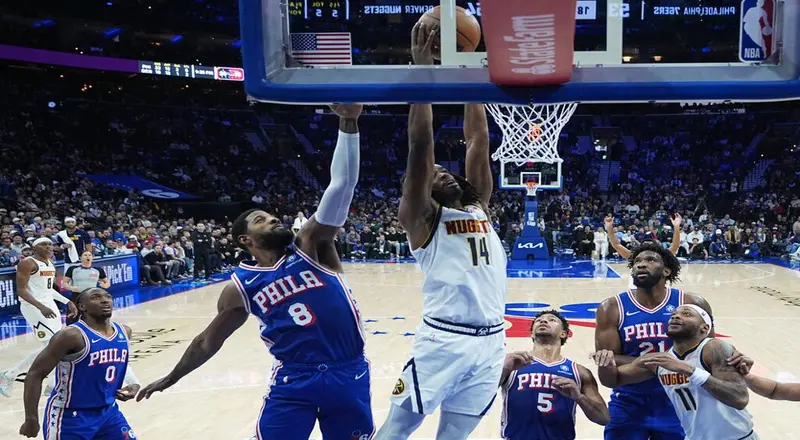
- Clutch play: Scored the go-ahead bucket in OT via a goaltending call
- Role: Offensive pressure and fearless finishing
Brown’s decisive score late in overtime became the defining moment that secured the Nuggets’ victory.
3. Joel Embiid (76ers)
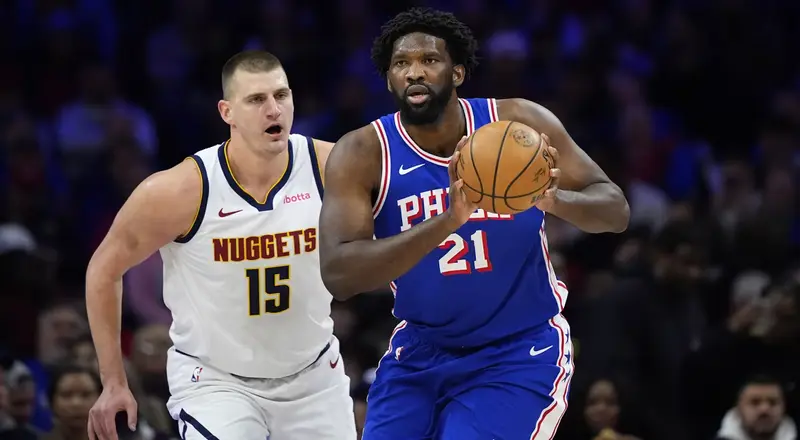
Joel Embiid continued to show his elite scoring and rebounding ability. Despite the loss, he was the top performer for Philadelphia and a consistent force throughout the game.
Embiid’s key stats:
- Points: 32
- Assists: 2
- Rebounds: 10
- Inside presence: Constantly pressured Denver’s defense
Embiid’s dominance in the paint and ability to draw fouls kept the 76ers in the contest until the final second.
Supporting Player Stats (Role Players)
1. Tyrese Maxey (76ers)
Tyrese Maxey had a strong all-around performance for the 76ers. He combined scoring with playmaking, making several big shots in regulation.
Maxey’s contribution:
- Points: 28
- Rebounds: 6
- Assists: 6
- Playing style: Aggressive off the dribble
Maxey’s offensive aggression was key to Philadelphia’s success throughout most of the game, though Denver managed to contain his impact late.
2. Peyton Watson (Nuggets)
Peyton Watson provided vital scoring and rebounding for Denver off the bench. His minutes were crucial in keeping the Nuggets close in regulation and helping pave the way for overtime.
Watson’s stats:
- Points: 24
- Rebounds: 7
- Assists: 4
- Role: Strong bench energy and scoring punch
Watson’s versatile play helped keep Denver’s offense balanced even without their starters available.
3. VJ Edgecombe (76ers)
VJ Edgecombe played a key supporting role for the 76ers. His ability to facilitate and score from various spots on the floor gave Philadelphia extra production.
Edgecombe’s contributions:
- Points: 17
- Assists: 9
- Rebounds: 8
- Playmaking influence: Helped space the floor
Edgecombe’s near double-digit assists showed his ability to affect the game beyond scoring.
Curuious about Cleveland Cavaliers vs Pacers last match players stats? Relax! Here we got you covered.
Team Stats Comparison
Here’s a simple breakdown of how both teams compared in key statistical areas:
| Stat Category | Denver Nuggets | Philadelphia 76ers |
|---|---|---|
| Final Score | 125 | 124 |
| Result | Win (Overtime) | Loss |
| Field Goal % | ~49% | ~48% |
| Three-Point % | Solid shooting | Slightly lower |
| Free Throws | Efficient in OT | Missed key chances |
| Total Rebounds | Balanced effort | Comparable |
| Assists | Strong ball movement | Guard-led playmaking |
| Turnovers | Controlled late | Costly in OT |
| Bench Points | Higher impact | Limited production |
Denver’s advantage came from bench efficiency and smarter shot selection in overtime. Philadelphia stayed close statistically but failed to capitalize on key possessions late.
Key Player Comparison
| Player | Team | Key Contribution |
|---|---|---|
| Joel Embiid | 76ers | Dominant interior scoring and rebounding |
| Tyrese Maxey | 76ers | Fast-paced scoring, late-game pressure |
| Jamal Murray | Nuggets | Shot creation and clutch control |
| Nikola Jokic | Nuggets | Playmaking, spacing, leadership |
| Jalen Pickett | Nuggets | Unexpected scoring spark |
Denver’s supporting cast played a decisive role, while Philadelphia leaned heavily on its stars.
Match Timeline & Momentum Shifts
The game opened with both teams setting an aggressive tempo, trading baskets and attacking early mismatches. Philadelphia relied on strong interior presence and quick guard penetration, while Denver answered with patient half-court execution. Neither side managed to build a double-digit lead in the opening quarter.
As the middle quarters unfolded, momentum swung back and forth. The 76ers briefly gained control through efficient scoring runs, but Denver responded with timely shooting and improved defensive rotations. Each push by Philadelphia was matched almost immediately, keeping the scoreline tight entering the final stretch.
The fourth quarter saw heightened intensity, with defensive pressure increasing on both ends. Missed opportunities and late turnovers kept the contest alive, eventually forcing overtime. That extra period shifted momentum firmly toward Denver, who executed with greater calm and precision.
Offensive & Defensive Performance Breakdown
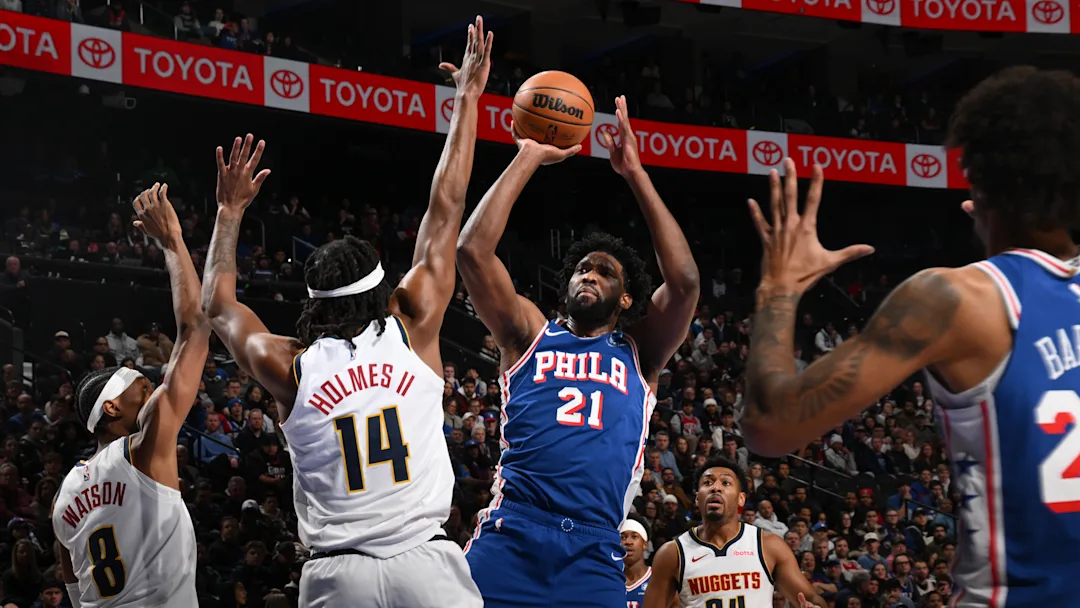
Offensively, Denver focused on ball movement and spacing, ensuring that no single player carried the full scoring burden. Their attack emphasized controlled possessions, allowing playmakers to read the defense and create high-percentage looks when it mattered most.
Defensively, the Nuggets tightened their coverage in overtime, forcing Philadelphia into contested shots rather than easy finishes. Help defense improved noticeably, and rebounding discipline prevented second-chance points during crucial possessions.
Philadelphia’s offense was driven largely by individual creation and interior scoring. While effective for long stretches, the lack of consistent late-game stops defensively made it difficult to convert offensive pressure into a decisive lead.
Coaching & Tactical Decisions
Denver’s coaching staff showed trust in their rotation, particularly during overtime. Keeping experienced decision-makers on the floor allowed for better shot selection and reduced unnecessary risks. This steady approach proved vital in a one-point game.
Strategically, Denver emphasized floor spacing and off-ball movement to keep the defense stretched. That approach opened passing lanes and forced Philadelphia to defend multiple threats rather than collapsing on one scorer.
Philadelphia made solid adjustments earlier in the game, especially in slowing Denver’s transition offense. However, late defensive switches were occasionally slow, which Denver capitalized on through disciplined execution.
Key Moments That Changed the Game
One of the most defining moments came late in regulation when Denver prevented an easy transition basket, forcing a tough contested shot. That defensive stand helped send the game into overtime rather than ending in regulation.
In overtime, Denver converted critical possessions while protecting the ball. A combination of smart shot selection and controlled pacing shifted pressure onto Philadelphia, who struggled to match that efficiency.
Another key swing occurred at the free-throw line, where Denver capitalized on their chances while Philadelphia missed opportunities that could have changed the outcome. In a one-point finish, those moments proved decisive.
What This Match Means Going Forward
This victory reinforced Denver’s reputation as a composed, playoff-ready team capable of executing in high-pressure situations. Winning a tight overtime game against a strong Eastern Conference opponent adds confidence and momentum moving forward.
For Philadelphia, the narrow loss highlighted both strengths and areas for improvement. Their ability to stay competitive against elite teams is clear, but late-game execution and defensive consistency remain key focus areas.
Both teams leave this matchup with valuable lessons that could shape future encounters as the season progresses.
What This Game Signals Ahead of the March 18 Rematch
This overtime battle offered clear insights into what fans can expect when these teams meet again on March 18, 2026. Denver’s bench depth and late-game composure could again play a decisive role, especially if injuries impact rotations. Philadelphia, meanwhile, will likely focus on tightening defensive execution and reducing late turnovers to avoid another narrow loss.
If similar intensity carries into the next matchup, even small adjustments could swing the result. For more NBA game breakdowns and updated match insights, explore the Latest Match Player Stats for deeper analysis.
FAQs
Who won the latest Denver Nuggets vs 76ers game?
The Denver Nuggets won the most recent matchup 125–124 in overtime.
Did the game go into overtime?
Yes, the match was tied at the end of regulation and decided in overtime.
What was the biggest factor in Denver’s win?
Late-game execution, disciplined defense, and bench impact were decisive factors.
How did the 76ers perform offensively?
Philadelphia relied on strong individual scoring and interior pressure but struggled to finish key possessions late.
Which team had better overtime execution?
Denver controlled the tempo and converted crucial scoring chances in overtime.
Was this a close game throughout?
Yes, the score remained tight for most of the game, with multiple lead changes.
What did this game reveal about Denver?
It showed Denver’s ability to stay calm, organized, and effective in high-pressure moments.
What should Philadelphia improve after this loss?
Late-game defensive rotations and converting key scoring chances remain areas to address.
Final Opinion
The updated Denver Nuggets vs 76ers match player stats confirm a tightly contested NBA battle decided by execution, not talent alone. Denver’s ability to stay composed in overtime proved decisive, while Philadelphia fell just short despite strong individual performances.
This game serves as a textbook example of how depth, discipline, and late-game awareness can swing outcomes in elite-level basketball.