Houston Rockets vs Dallas Mavericks Match Player Stats

Who Won & What Happened?
The Houston Rockets vs Dallas Mavericks Match Player Stats from Saturday, January 31, 2026, tell a tight, high-level Western Conference story. Houston edged Dallas 111–107 in a fast-paced battle where ball movement and late execution decided the outcome.
In this latest game report between these teams, we break down official box score data — including top performers, team totals, momentum swings, and quarter impact. If you’re looking for the latest verified stats from this matchup, this is the complete analysis.
Game Summary & Final Score
On January 31, 2026, the Houston Rockets defeated the Dallas Mavericks 111–107. Houston Rockets finished with a +4 differential and controlled key stretches late in the fourth quarter. The Rockets shot 41.7% from the field and dominated ball distribution with 33 assists.
Dallas stayed competitive behind strong interior scoring and rebounding, but free-throw inefficiency (57.7%) and limited defensive disruption hurt them late. The Mavericks finished with 48 total rebounds and shot 44.6% overall.
This matchup now adds another chapter to the Western Conference race, and if you’ve followed similar breakdowns on NBA Stats Time, you know how small statistical edges often decide games like this.
Team Performance Review – What Stood Out?
Dallas Mavericks Team Performance
Dallas finished with 107 points on 41-of-92 shooting (44.6%). They hit 10-of-23 from three-point range (43.5%), which kept them within striking distance. Their inside presence was strong, especially on offensive rebounds (11 total).
However, free throws were costly. The Mavericks converted just 15-of-26 (57.7%). In a four-point loss, that gap becomes critical. They also recorded only 3 steals and 4 blocks — not enough defensive pressure in crunch time.
Houston Rockets Team Performance
Houston scored 111 points on 45-of-108 shooting (41.7%). While their field goal percentage was slightly lower than Dallas, they generated far more shots and controlled the glass with 53 rebounds.
The biggest separator? Ball movement and care. The Houston Rockets had 33 assists and only 5 turnovers. That ratio is elite in modern NBA basketball. They also forced 11 Dallas turnovers and converted efficiently in transition.
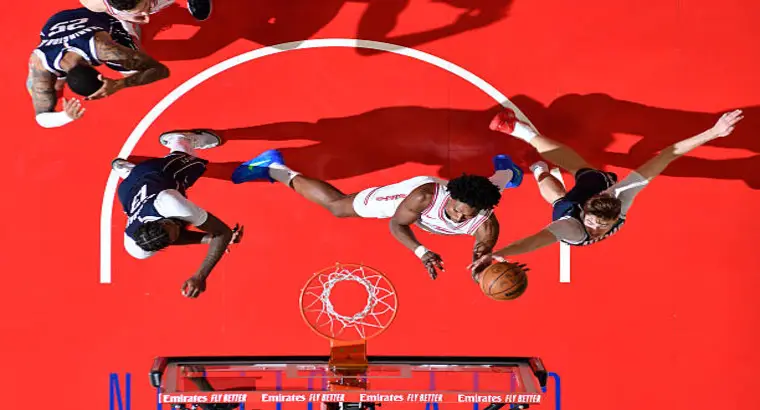
If you compare this to other Rockets breakdown — especially their recent Western Conference performances — the pattern of assist-heavy offense continues Houston Rockets detailed team stats.
Dallas Mavericks Leading Players Stats
1. Cooper Flagg
Stats:
- Points: 34
- Rebounds: 12
- Assists: 5
- Steals: 0
- Blocks: 1
- Turnovers: 2
- Plus/Minus: +2
Performance Insights:
Cooper Flagg carried the scoring load. He attacked early, finished through contact, and controlled the defensive glass. His 34 points came on 13-of-25 shooting, and he played nearly 39 minutes. Dallas stayed competitive largely because of his two-way effort.
2. Daniel Gafford
Stats:
- Points: 16
- Rebounds: 11
- Assists: 1
- Steals: 0
- Blocks: 0
- Turnovers: 0
- Plus/Minus: +1
Performance Insights:
Gafford was dominant inside. He shot 7-of-10 from the field and secured 5 offensive rebounds. His efficiency kept Dallas steady in the paint. He protected possessions well with zero turnovers.
3. Brandon Williams
Stats:
- Points: 13
- Rebounds: 0
- Assists: 0
- Steals: 0
- Blocks: 0
- Turnovers: 1
- Plus/Minus: +3
Performance Insights:
In limited minutes (8:58), Williams gave Dallas instant offense. He shot 5-of-7 and hit 2-of-3 from deep. His scoring burst helped Dallas close a third-quarter gap briefly.
4. Max Christie
Stats:
- Points: 11
- Rebounds: 2
- Assists: 1
- Steals: 0
- Blocks: 1
- Turnovers: 2
- Plus/Minus: -7
Performance Insights:
Christie stretched the floor with 3-of-4 shooting from beyond the arc. His perimeter shooting spaced Houston’s defense, though his overall impact was neutral due to defensive lapses late.
5. P.J. Washington
Stats:
- Points: 9
- Rebounds: 4
- Assists: 1
- Steals: 1
- Blocks: 0
- Turnovers: 3
- Plus/Minus: -12
Performance Insights:
Washington contributed across categories but struggled with efficiency at the line (1-of-3). His -12 plus/minus reflects Houston’s runs while he was on the floor.
Mavericks Bench Contribution
Dallas received scoring from Brandon Williams (13), Klay Thompson (9), Caleb Martin (4), and Moussa Cisse (3). The bench added energy, but overall defensive consistency was missing. Depth scoring helped, yet Houston’s second unit was more balanced.
Houston Rockets Key Players Stats
The Houston Rockets vs Dallas Mavericks Match Player Stats clearly show Houston’s balance. Five players scored in double figures, and the offense ran through smart passing and controlled pace. Here are the top five Rockets performers ranked by points (high to low), based strictly on the official box score.
1. Amen Thompson
Stats:
- Points: 21
- Rebounds: 8
- Assists: 9
- Steals: 2
- Blocks: 0
- Turnovers: 0
- Plus/Minus: +15
Performance Insights:
Amen Thompson was the engine. He attacked the rim, went 7-of-15 from the field, and hit 7-of-9 free throws. His nine assists and zero turnovers stand out. A +15 plus/minus shows how strongly Houston controlled the game while he was on the floor.
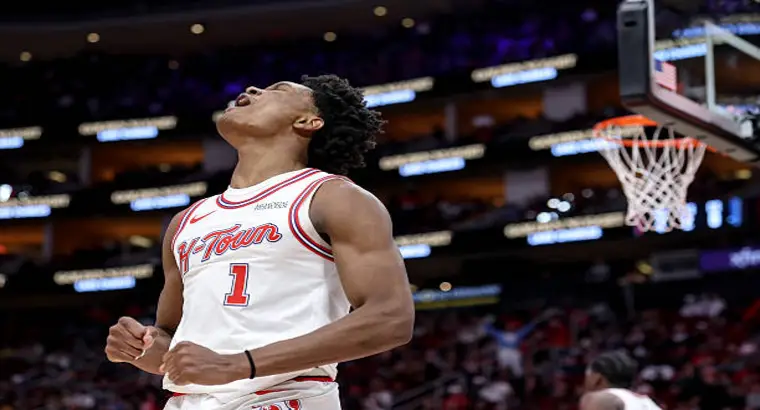
2. Jabari Smith Jr.
Stats:
- Points: 19
- Rebounds: 8
- Assists: 2
- Steals: 0
- Blocks: 3
- Turnovers: 0
- Plus/Minus: +12
Performance Insights:
Jabari Smith Jr. delivered one of his most efficient outings this season. He shot 7-of-13 overall and 3-of-5 from three-point range. His three blocks added defensive impact. He stretched Dallas’ defense and protected the rim in key stretches.
3. Tari Eason
Stats:
- Points: 17
- Rebounds: 7
- Assists: 3
- Steals: 2
- Blocks: 0
- Turnovers: 1
- Plus/Minus: +5
Performance Insights:
Tari Eason brought energy on both ends. He shot 7-of-15 and knocked down 3-of-5 from deep. His defensive presence helped disrupt Dallas’ rhythm, especially during second-half possessions.
4. Alperen Sengun
Stats:
- Points: 14
- Rebounds: 14
- Assists: 7
- Steals: 0
- Blocks: 0
- Turnovers: 2
- Plus/Minus: -3
Performance Insights:
Sengun recorded a strong double-double with 14 points and 14 rebounds. He also added seven assists, showing his playmaking ability from the post. Though his field goal percentage was 30.0% (6-of-20), his presence on the boards was vital.
5. Kevin Durant
Stats:
- Points: 13
- Rebounds: 5
- Assists: 8
- Steals: 2
- Blocks: 0
- Turnovers: 1
- Plus/Minus: +1
Performance Insights:
Kevin Durant impacted the game beyond scoring. He shot 6-of-17 but facilitated offense with eight assists. His defensive awareness added two steals. Even on a low-scoring night, his leadership shaped Houston’s tempo.
Rockets Bench Contribution
Houston’s bench played a major role in this 111–107 win. Josh Okogie scored 13 points on 5-of-11 shooting, including 3-of-6 from beyond the arc. Reed Sheppard added 6 points with 2 steals and 1 block. Clint Capela contributed 6 points and 4 rebounds in limited minutes.
Rockets vs Mavericks Match Stats Comparison Snapshot
Below is the full team comparison between Houston Rockets and Dallas Mavericks latest match from the official January 31, 2026 box score:
| Category | Dallas Mavericks | Houston Rockets |
|---|---|---|
| Points | 107 | 111 |
| Field Goals | 41-92 (44.6%) | 45-108 (41.7%) |
| 3-Point Shooting | 10-23 (43.5%) | 10-26 (38.5%) |
| Free Throws | 15-26 (57.7%) | 11-15 (73.3%) |
| Total Rebounds | 48 | 53 |
| Offensive Rebounds | 11 | 18 |
| Assists | 19 | 33 |
| Steals | 3 | 10 |
| Blocks | 4 | 6 |
| Turnovers | 11 | 5 |
Statistical Analysis
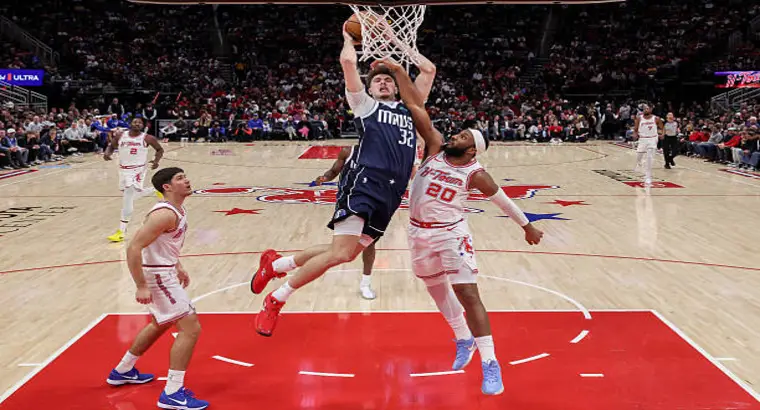
The biggest difference in the Dallas Mavericks vs Houston Rockets Match Player Stats was ball movement. Houston recorded 33 assists compared to Dallas’ 19. That gap directly influenced shot quality.
Turnovers were another deciding factor. The Rockets committed only 5 turnovers, while Dallas had 11. Houston also dominated offensive rebounds (18 to 11), giving them extra possessions.
Free-throw efficiency played a role as well. Houston shot 73.3% from the line. Dallas finished at 57.7%. In a four-point game, that margin is significant.
Game Turning Points & Quarter Breakdown
The Houston Rockets vs Dallas Mavericks Match Player Stats reveal a game that shifted through possession control rather than explosive scoring runs. Houston’s assist flow and defensive timing gradually tilted momentum in their favor.
Let’s break it down quarter by quarter.
First Quarter – Balanced Start
Both teams opened with controlled pace. Dallas leaned on interior touches through Cooper Flagg and Daniel Gafford, while Houston moved the ball early, setting the tone for their 33-assist night.
Rebounding was competitive in this stretch. Neither side created separation, and the tempo suggested a tactical battle rather than a fast break contest.
Second Quarter – Houston’s Ball Movement Emerges
The Rockets’ passing began to separate them. Amen Thompson and Kevin Durant facilitated efficiently, creating higher-percentage looks.
Houston’s ability to generate assists while limiting turnovers became visible here. Dallas continued scoring but relied more on individual shot creation instead of fluid ball rotation. This stretch laid the foundation for Houston’s eventual edge.
Third Quarter – Dallas Push Behind Flagg
Dallas responded with aggression after halftime. Cooper Flagg attacked downhill, and Brandon Williams provided short-burst scoring in limited minutes.
The Mavericks’ offensive rebounding (11 total in the game) kept them within striking distance. However, Houston maintained defensive discipline and avoided careless possessions. Even when Dallas made a push, Houston did not lose structure.
Fourth Quarter – Execution Decides It
The final period highlighted why Houston won 111–107. Amen Thompson controlled tempo, finishing the night with:
- 21 points
- 9 assists
- 0 turnovers
- +15 plus/minus
Houston’s late-game efficiency, combined with Dallas’ missed free throws earlier (15-of-26 overall), ultimately shaped the result. The Rockets protected the ball and converted enough opportunities to secure the four-point win.
When measured against similar close finishes across the league, games often hinge on assist-to-turnover ratios — something we regularly analyze in our Western Conference matchup breakdowns.
Advanced Game Insights
This wasn’t about one superstar explosion. It was about structure. Houston distributed scoring across five double-digit players. Amen Thompson (21), Jabari Smith Jr. (19), Tari Eason (17), Alperen Sengun (14), and Kevin Durant (13) combined for 84 points.
Dallas relied heavily on Cooper Flagg’s 34-point effort and interior scoring from Daniel Gafford (16 points, 11 rebounds). However, limited assist production (19 total) meant fewer rhythm shots late.
The Houston Rockets vs Dallas Mavericks Match Player Stats confirm a modern basketball principle: efficiency plus ball control wins close games.
Houston Rockets vs Dallas Mavericks Timeline
| Date | Winner | Score | Location |
|---|---|---|---|
| 4 Nov 2025 | Houston | 110–102 | Houston |
| 7 Dec 2025 | Dallas | 122–109 | Dallas |
| 4 Jan 2026 | Dallas | 110–104 | Dallas |
| 1 Feb 2026 | Houston | 111–107 | Houston |
FAQs – Mavericks vs Rockets Last Match
Who was the top scorer in this game?
Cooper Flagg led all scorers with 34 points. For Houston, Amen Thompson was the leading scorer with 21 points.
Who recorded the most rebounds?
Alperen Sengun grabbed 14 rebounds for Houston, the highest in the game. Cooper Flagg led Dallas with 12 rebounds.
Which player had the most assists Mavericks & Rockets last match?
Amen Thompson recorded 9 assists, the highest total in the matchup.
What was the key statistical difference?
Houston’s 33 assists compared to Dallas’ 19 was the most significant statistical gap.
How many turnovers did Houston commit?
The Rockets committed only 5 turnovers, showing strong ball security.
Did Dallas win the rebounding battle?
No. Houston secured 53 total rebounds, while Dallas had 48.
Final Takeaway
The January 31, 2026 edition of the Houston Rockets vs Dallas Mavericks Match Player Stats tells a clear story. Houston did not shoot dramatically better. They simply executed better.
Superior passing, fewer turnovers, stronger free-throw shooting, and offensive rebounding depth secured a 111–107 win.In tightly contested Western Conference matchups, those details define the outcome.